Hall Effect vs TMR: Pause the funeral
2026年5月27日

Jedidiah
Hall Effect is dead. TMR is the future! Or is it?
You’ve heard the term ‘TMR’ thrown around by keyboard reviewers. But what actually is TMR, and does it make Hall Effect obsolete? Are brands like Wooting falling behind by sticking with older technology?
Let’s take a closer look.
What is TMR? How does it compare to Hall Effect?
TMR (Tunnel Magnetoresistance) and Hall Effect are both magnetic sensor technologies that let your keyboard detect when, where and how much you press a key.
How it works:
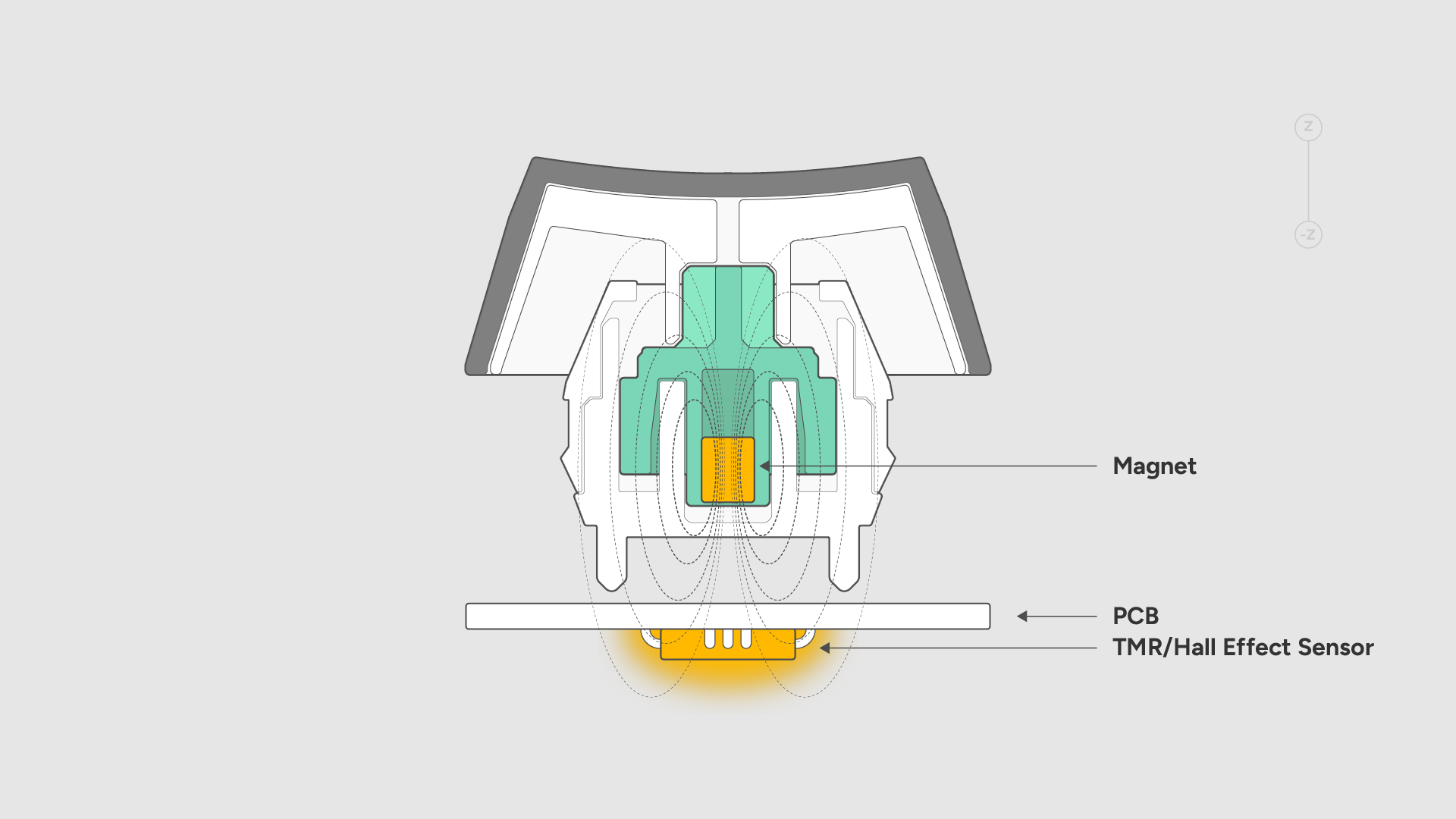
- Hall Effect sensor: Detects the switch magnet moving and produces a voltage reading based on the strength of that magnetic field
- TMR sensor: Detects the switch magnet moving and produces a resistance reading based on the strength of that magnetic field
Both technologies detect magnetic field changes to determine how far a key has been pressed. Think of them as two different paths to the same destination.
Both Hall Effect and TMR sensors can detect movements as small as 0.02 mm when paired with well-optimised firmware. To put that in perspective, that's roughly one-third the width of a human hair, well beyond the limits of human micro movements.
What is sensitivity? What is the perfect amount?
TMR sensors are often marketed as having higher peak sensitivity (mV/G), whereas Hall Effect sensors have a lower peak sensitivity. This difference comes from their physical placement and calibrated sensitivity.
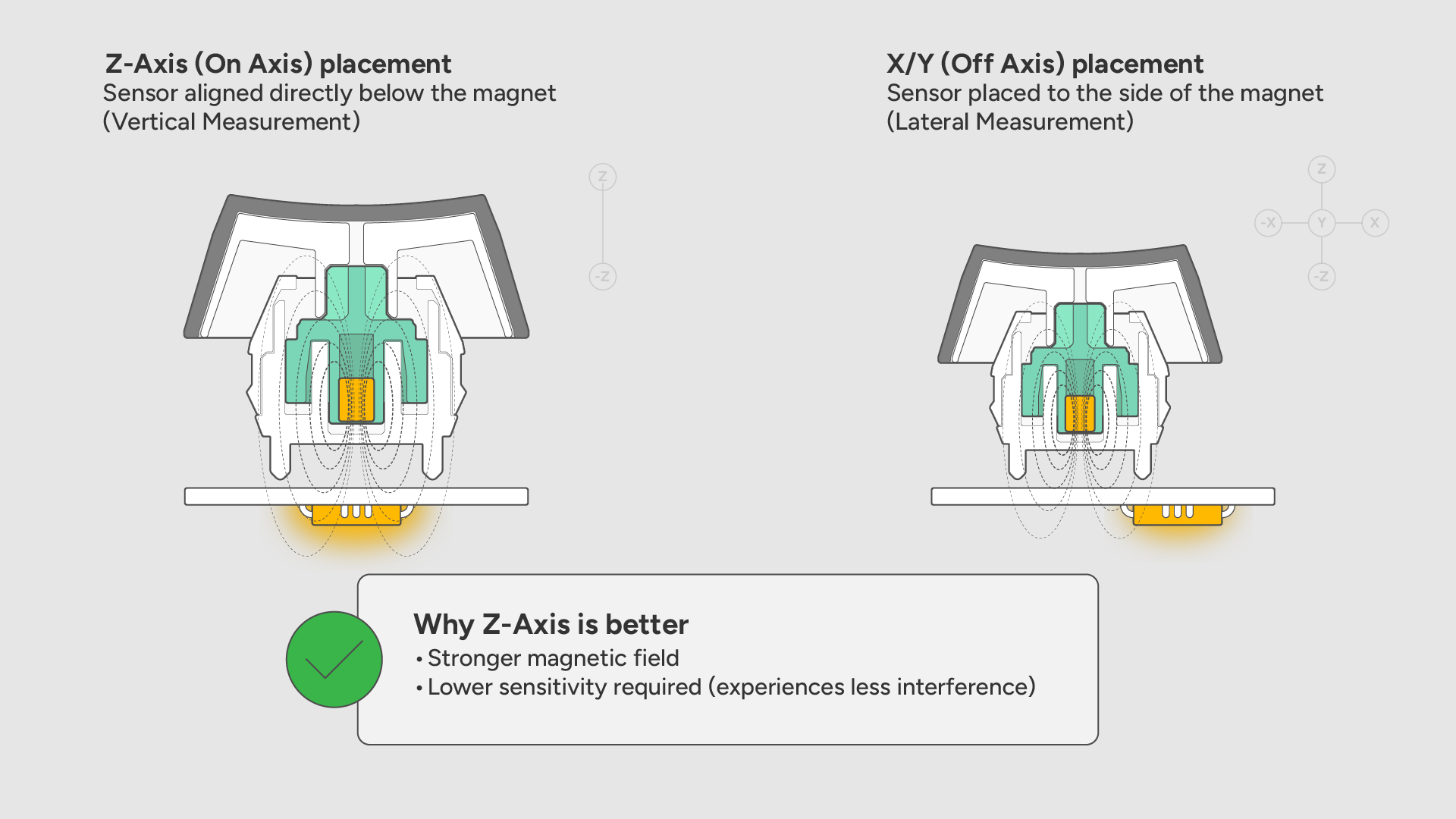
Most TMR sensors are mounted off-axis, which increases signal interference and requires higher sensitivity to compensate. Hall Effect sensors, and some recent TMR sensors, have since adopted vertical (Z-axis) placement. This orientation produces a stronger, cleaner signal with less interference and uses lower sensitivity to achieve the same result.
Do we want more or less sensitivity? Is there a perfect amount?
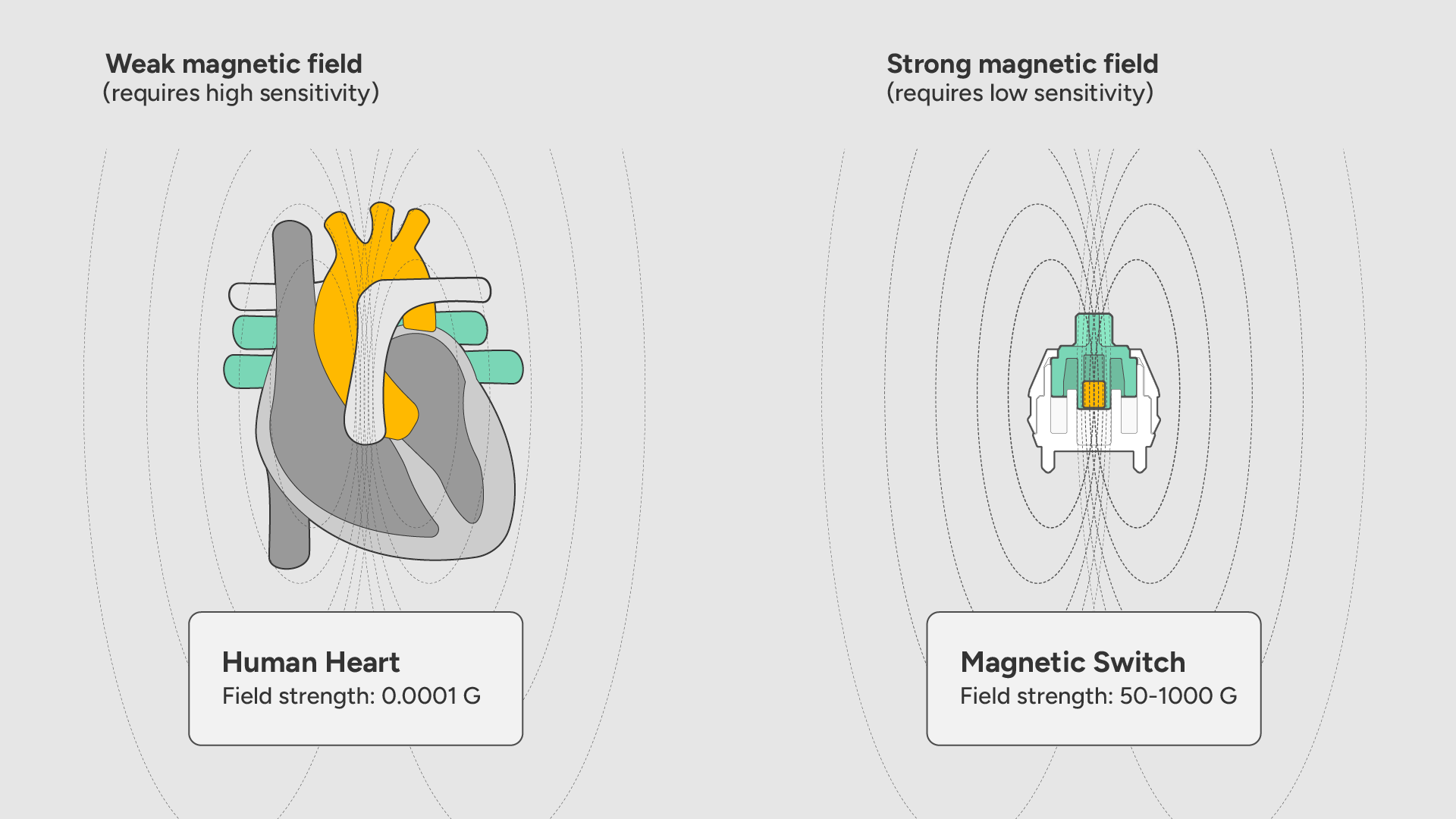
Bigger sensitivity numbers are needed in biomedical fields, when trying to read a weak magnetic field that cannot be made stronger, such as sensing the magnetic field of the human heart (~0.0001 G).
However, when sensing the movement of a keyboard switch magnet, the magnetic field is much stronger (~50 to 1000 G) and the sensitivity is set much lower. Your sensitivity needs to match your use case.
Weaker magnetic fields need higher sensitivities, while stronger magnetic fields need lower sensitivities. It's not about more or less sensitivity, but which sensitivity best fits the magnetic field.
Once sensitivity is calibrated correctly, both TMR and Hall Effect sensors utilise the same sensitivity on a keyboard.
What affects sensor accuracy?
Sensor noise refers to the small fluctuations in the voltage readings your sensor picks up, often caused by the sensor itself, unstable USB power, or RGB LEDs. When a keyboard is experiencing extreme noise issues, you may see symptoms such as phantom key presses.
For an accurate and precise sensor reading, you want a high signal-to-noise ratio. This is an area where TMR sensors once held a significant advantage over older Hall Effect sensors.
Pre-2020s Hall Effect sensors had measurably worse noise performance than TMR sensors, but that gap has largely closed. Today's best Hall Effect sensors offer strong signal-to-noise ratios, making sensor noise a non-issue when quality parts and reliable suppliers are used.
In practice, today’s noise issues in keyboards are more often traced to unstable USB power from out-of-spec USB ports or motherboards, than to the sensor itself.
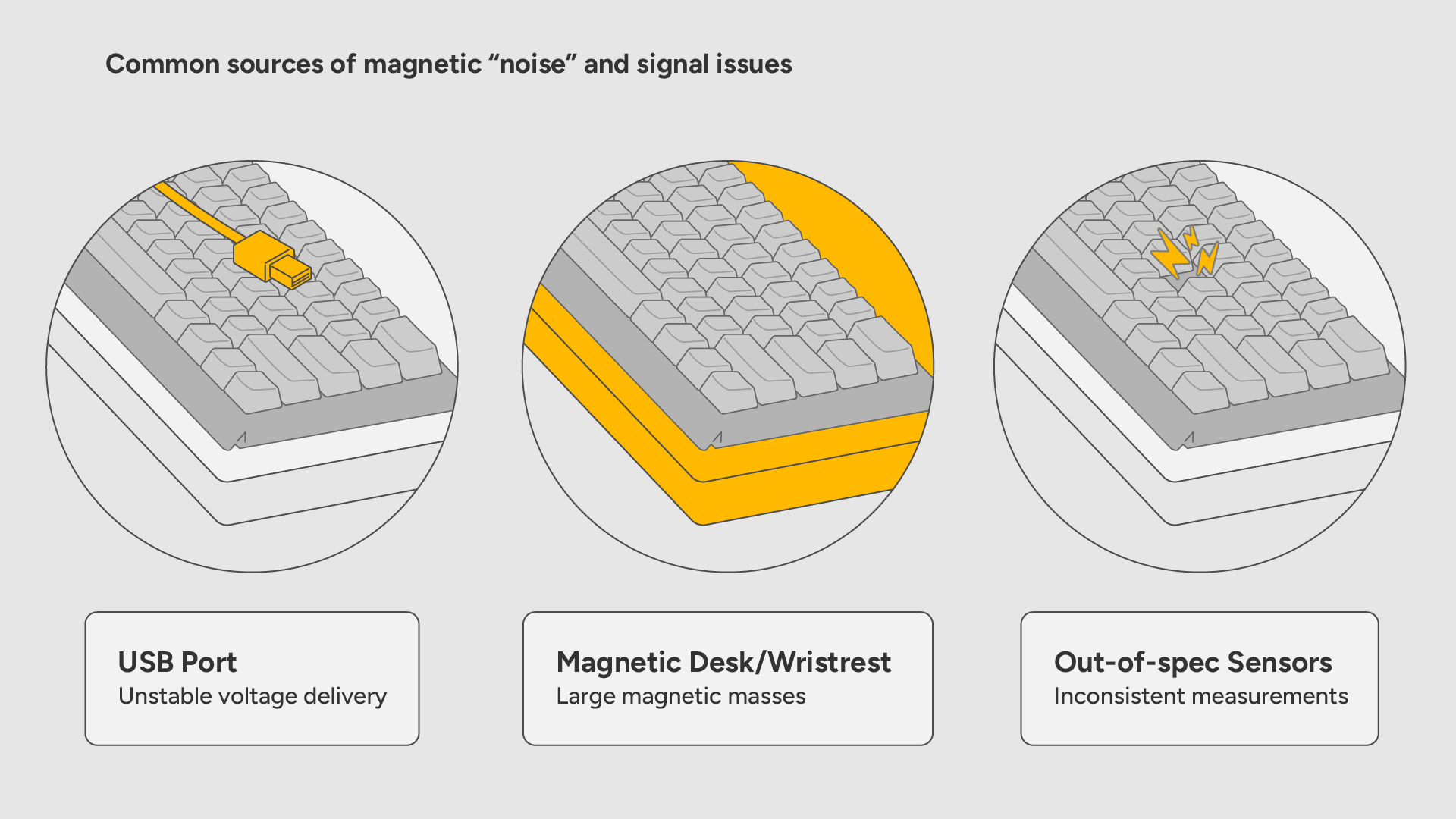
Software is king.
Outside of sensor noise, firmware and software become the biggest factors for accuracy and precision.
It's not as simple as setting your profile once and never using the software again. Your keyboard is using your software every time you press and release a key.
When you press a key down 0.67mm, you want it to read as 0.67mm (accuracy), and you want that to be consistent every single time (precision). This is accomplished with software.
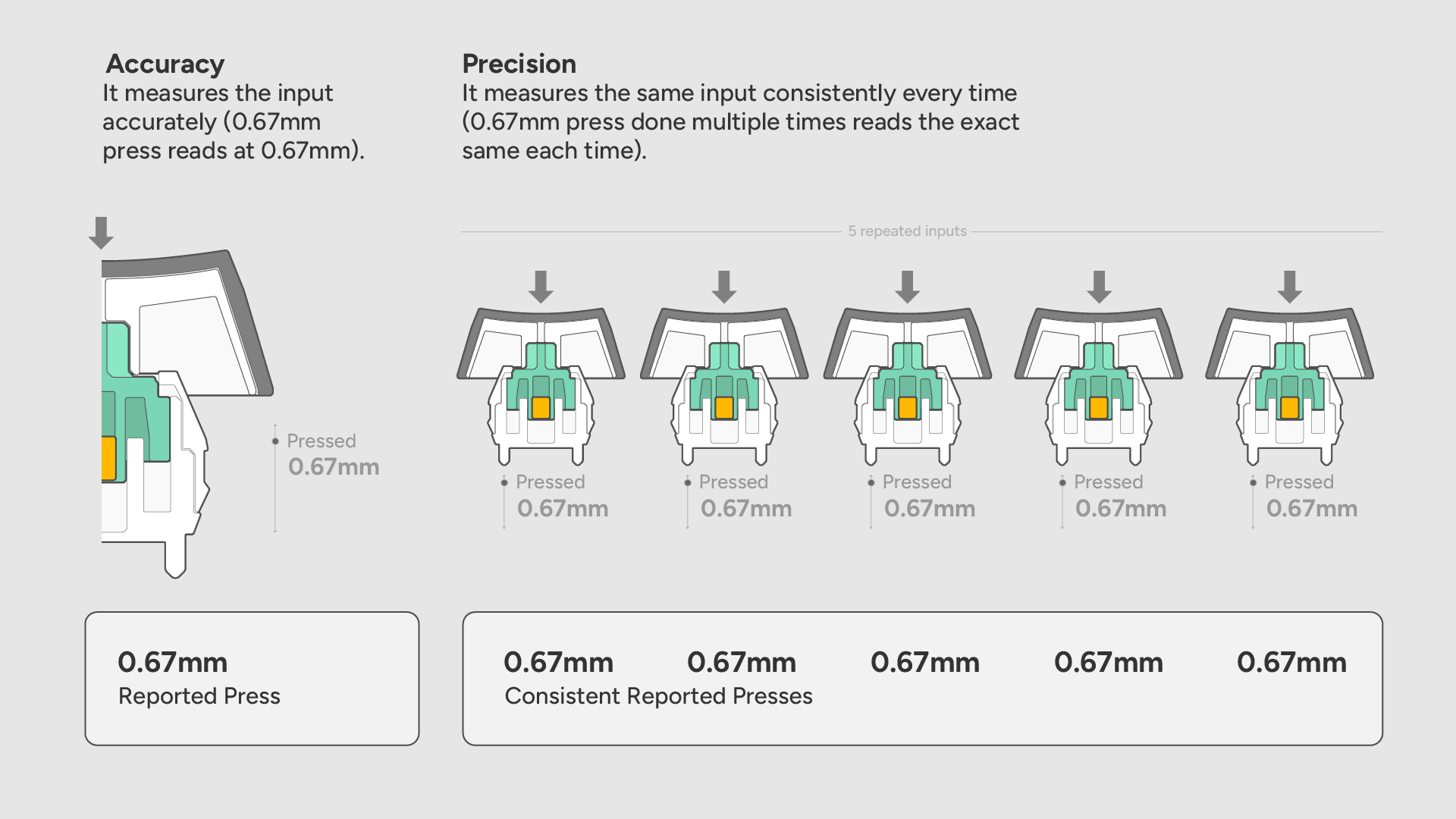
Ongoing software updates are crucial. Whether it's a bug causing your 0.67mm press to trigger at 0.59mm, or Rapid Trigger releasing your strafe too early, good software solves these problems.
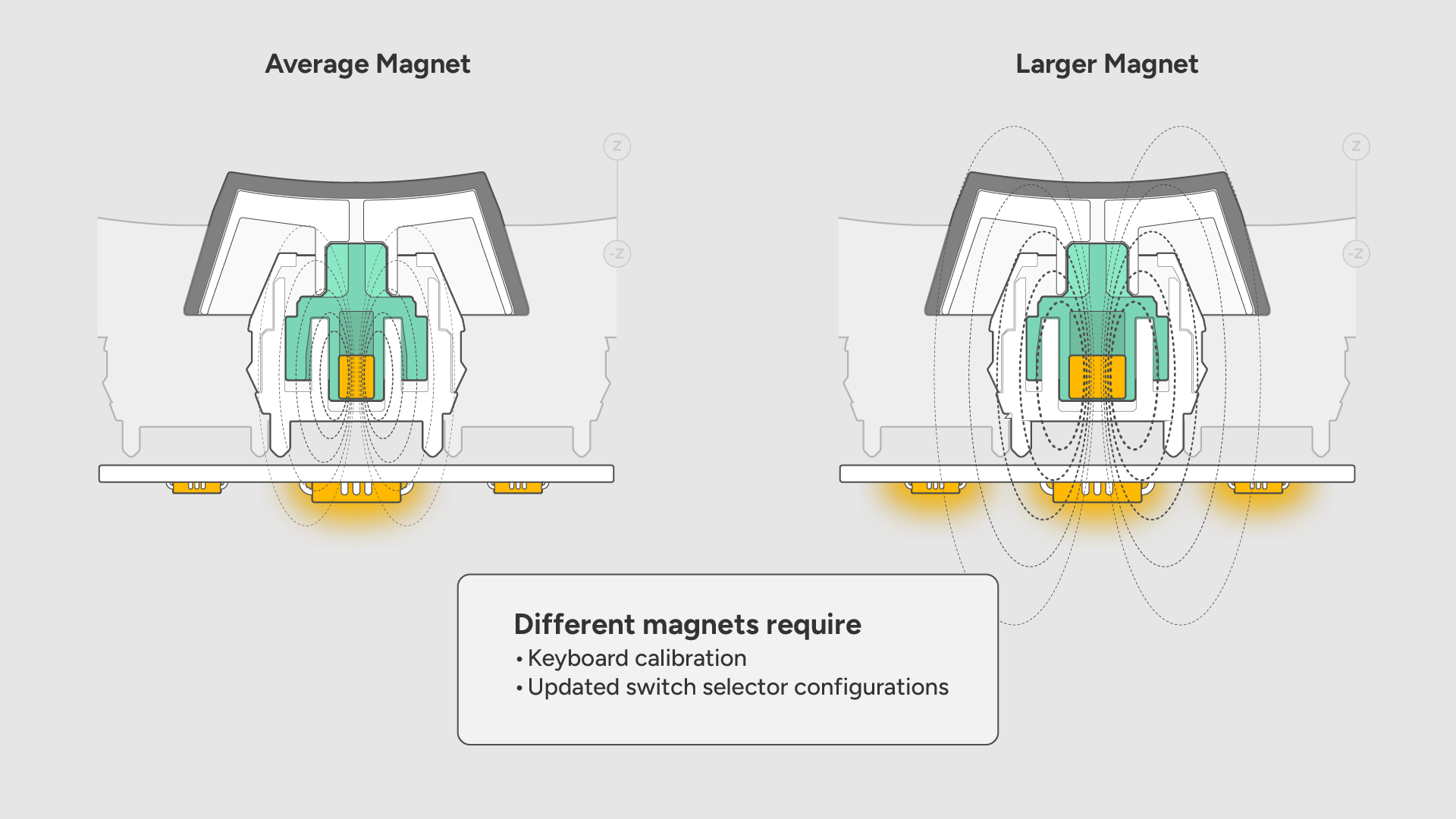
Finding and fixing bugs, refining programming, and adding features that improve accuracy and precision are key. Even something as small as a switch’s magnet size can change your accuracy and need a software update.
What are TMR’s biggest strengths?
TMR sensors are more power efficient, though they do require signal boosting to work in a keyboard.
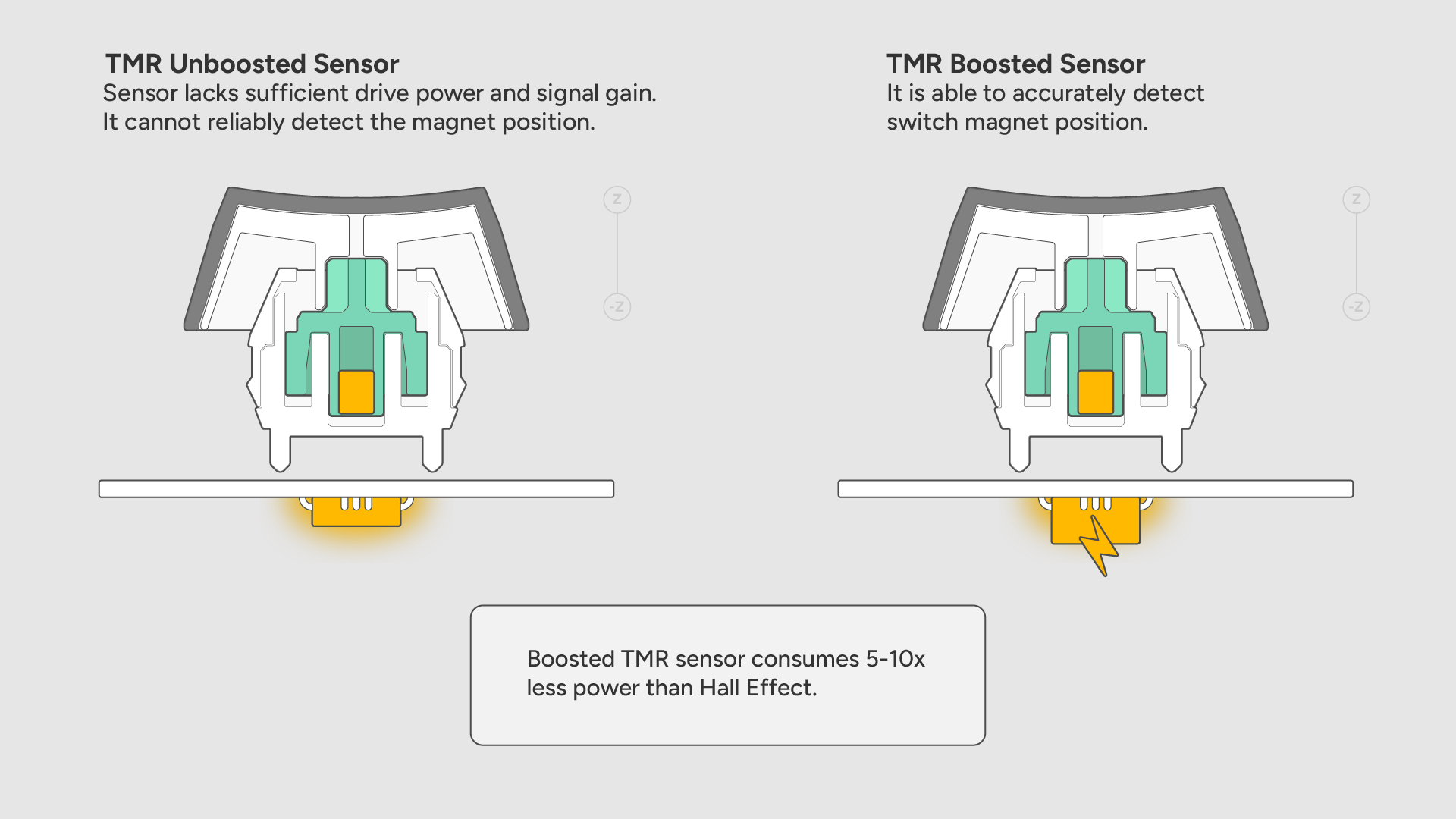
In our testing, TMR sensors consumed 5 to 10 times less power than Hall Effect sensors after signal boosting. This proves to be a real advantage in power limited scenarios, such as wireless keyboards, controllers and mice.
Full size Hall Effect keyboards with a numpad can also run into power constraints, sometimes requiring RGB limitations or keys to be disabled in performance modes. TMR sensors could be a meaningful solution here.
Hybrid switches for days!
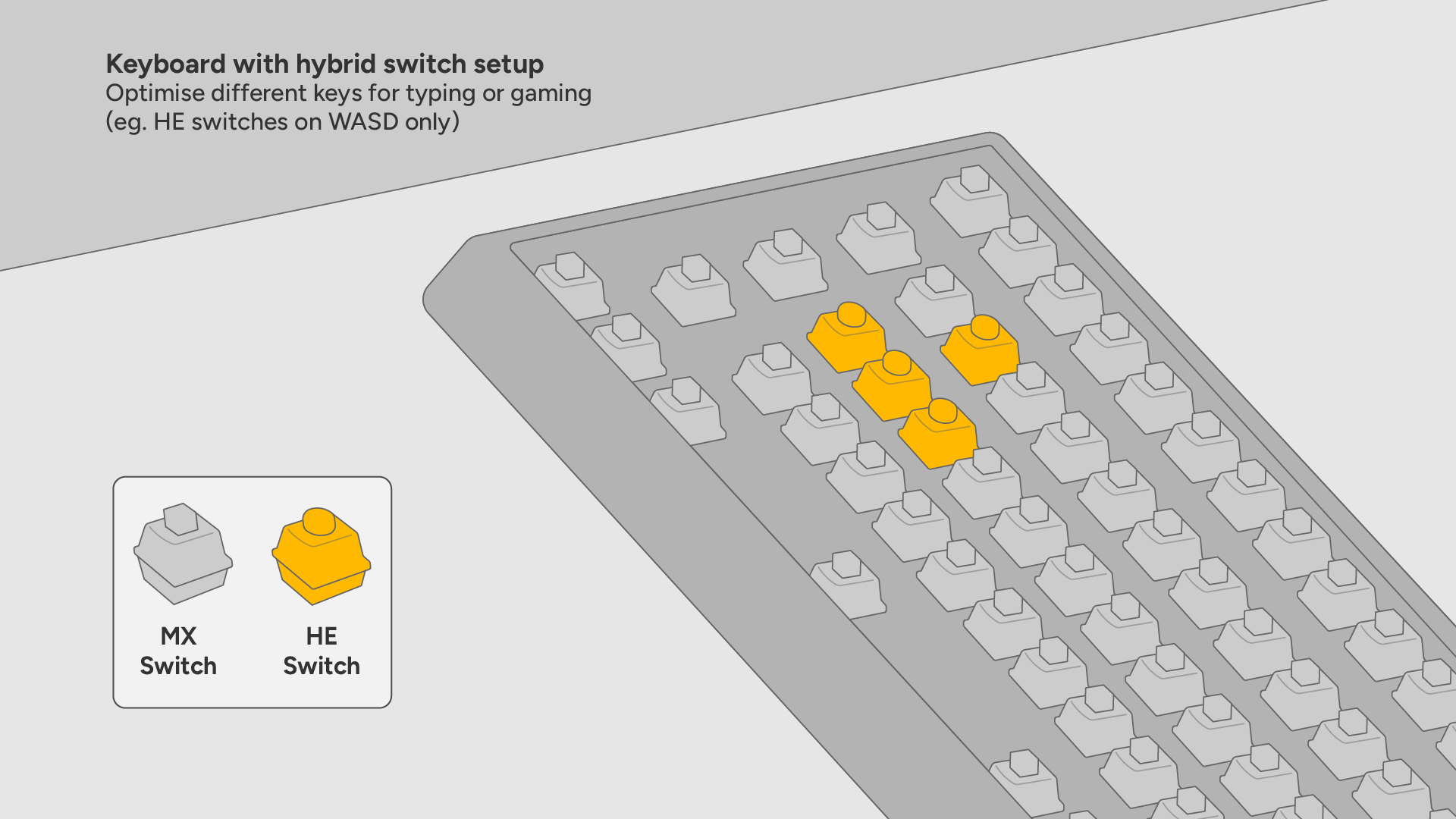
TMR sensors offer more flexible placement. This is partially what makes dual mechanical (MX) and magnetic switch support possible, though any off-axis positioning does re-introduce more signal noise.
Multi-switch PCB support is an interesting concept, letting users run MX switches, Hall Effect switches, or a mix of both on the same keyboard.
Why Wooting still chooses Hall Effect (so far)
Hall Effect has 2 big advantages:
1. Accurate, fast and stable across all currently usable activation ranges
2. Mature technology with years of production advancements and reliable suppliers
TMR is a genuinely interesting technology, but it hasn’t taken the lead in either performance or stability.
Hybrid switch support and wireless potential are nice perks, but they don't address any large-scale requests and haven’t shown gains in keyboard accuracy, precision or speed. And adopting TMR would come at a real cost.
Building a TMR ecosystem from scratch means rebuilding years of production tuning, firmware refinement and product validation, duplicating work that already exists in our Hall Effect ecosystem, without any meaningful improvement to the end result.
Wooting uses custom-made Hall Effect sensors, tuned specifically for our use case, that have been refined over years of small tweaks and improvements to the sensor production process. These changes don't always get a Calder YouTube update, but they allow us to make extremely stable, reliable and high quality analog keyboards at scale.
Performance, reliability and compatibility are our priorities. While we continue to make meaningful gains in all three areas with our Hall Effect sensors, we haven't seen TMR exceed them. We will continue to monitor TMR and other technologies, but we first want to see real, tangible performance benefits that make the transition worthwhile.
In the meantime, we remain focused on improving stability and performance where it matters. Our newly released switch selector update is an example of this, upgrading switch performance to lower deadzones and improve accuracy for both old and new keyboards.
ps - we get some questions a lot, so here are a few common misunderstandings in TMR vs Hall Effect
FAQ
1: Is TMR faster than Hall Effect
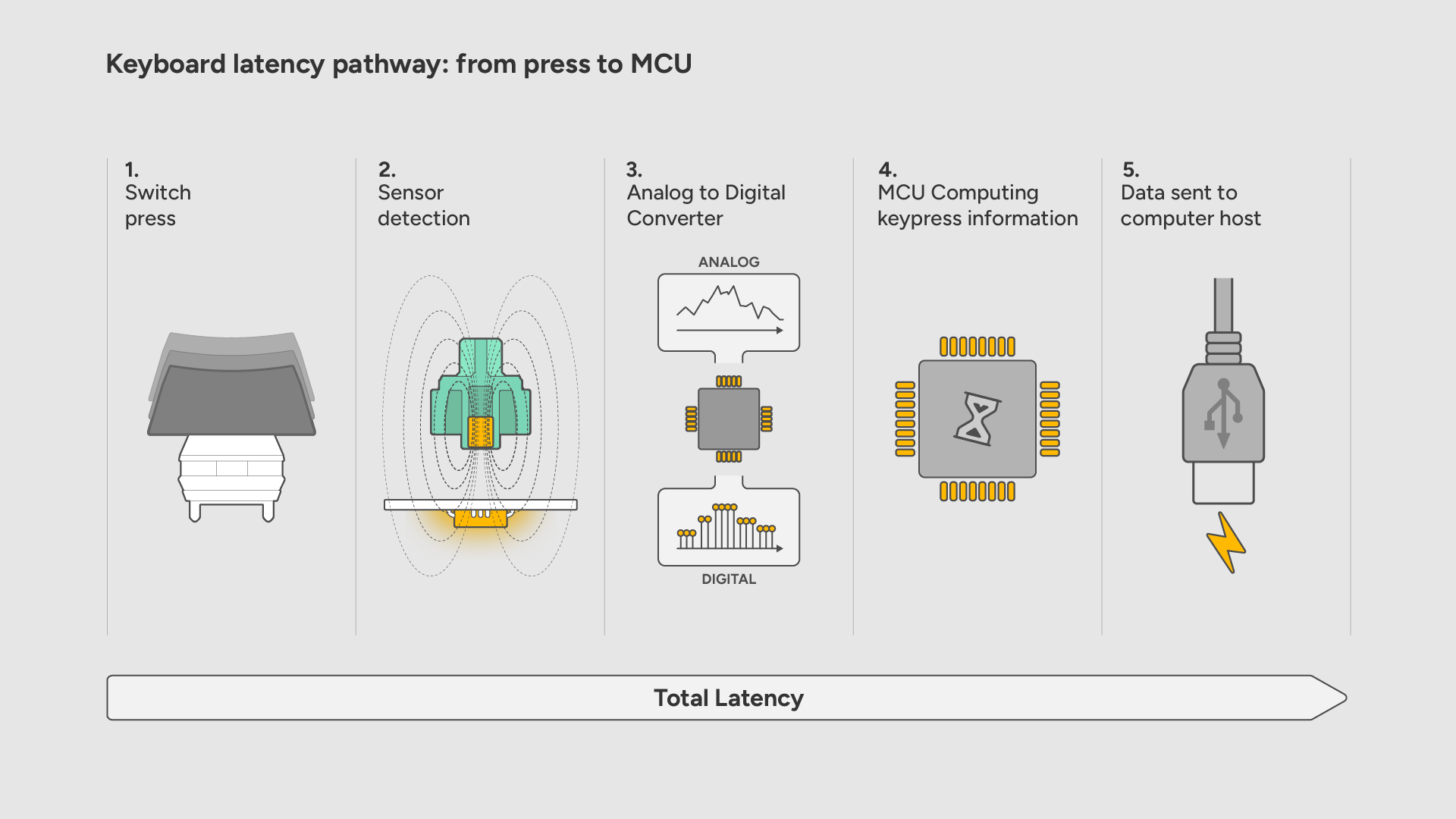
No, this is a common misconception. While TMR keyboards often advertise lower latency, the sensor type itself has no impact on scanning or processing speed.
TMR sensors do have a slower startup time from a powered-off state compared to Hall Effect sensors, though this is irrelevant in practice as TMR sensors typically remain on during normal use.
When measuring latency, scanning and processing speed are determined by other hardware and software factors, such as multiplexers, analog-to-digital converters, and firmware optimisation.
2: Is TMR more expensive?
No, not in our experience. Our initial quotes for TMR sensors came in at roughly the same price as our Hall Effect sensors.
Pricing may vary depending on the specific parts used, but cost has not been a reason to avoid TMR.
3: Is TMR more accurate and precise? Isn’t more sensitive better?
TMR sensors are often marketed as more accurate and precise due to higher peak sensitivity. In keyboards, this higher sensitivity is not a deliberate design advantage. It is a workaround. Some TMR sensors are mounted off-axis, which increases signal interference and requires higher sensitivity to compensate.
In magnetic keyboards, you typically want lower sensitivity because the magnetic fields produced by keyboard switches are already strong. Higher sensitivity just picks up more of what we don't need.
What actually matters is matching the sensitivity range to the magnet being used. Too much sensitivity for the job is just as problematic as too little.
Wootingより。
愛を込めて。
製品アップデート、ニュース、最新リリース情報。
キーボード
© 2026 Wooting. 無断転載を禁じます